A home can look well maintained, have a clean inspection report, and still contain an odorless gas that raises a serious health concern over time. That is why radon testing before buying a house belongs in the due-diligence process for Connecticut buyers. You cannot see or smell radon, and a standard home inspection alone cannot determine whether the level inside a specific property is safe.
For a buyer, the purpose of a radon test is not to create unnecessary worry or stop a sale. It is to replace an unknown with a documented result before your inspection contingency and negotiation window close. If elevated radon is found, it can usually be reduced with a proven mitigation system. The value of testing is knowing what needs attention and having time to address it properly.
Why Connecticut Homes Need Radon Testing
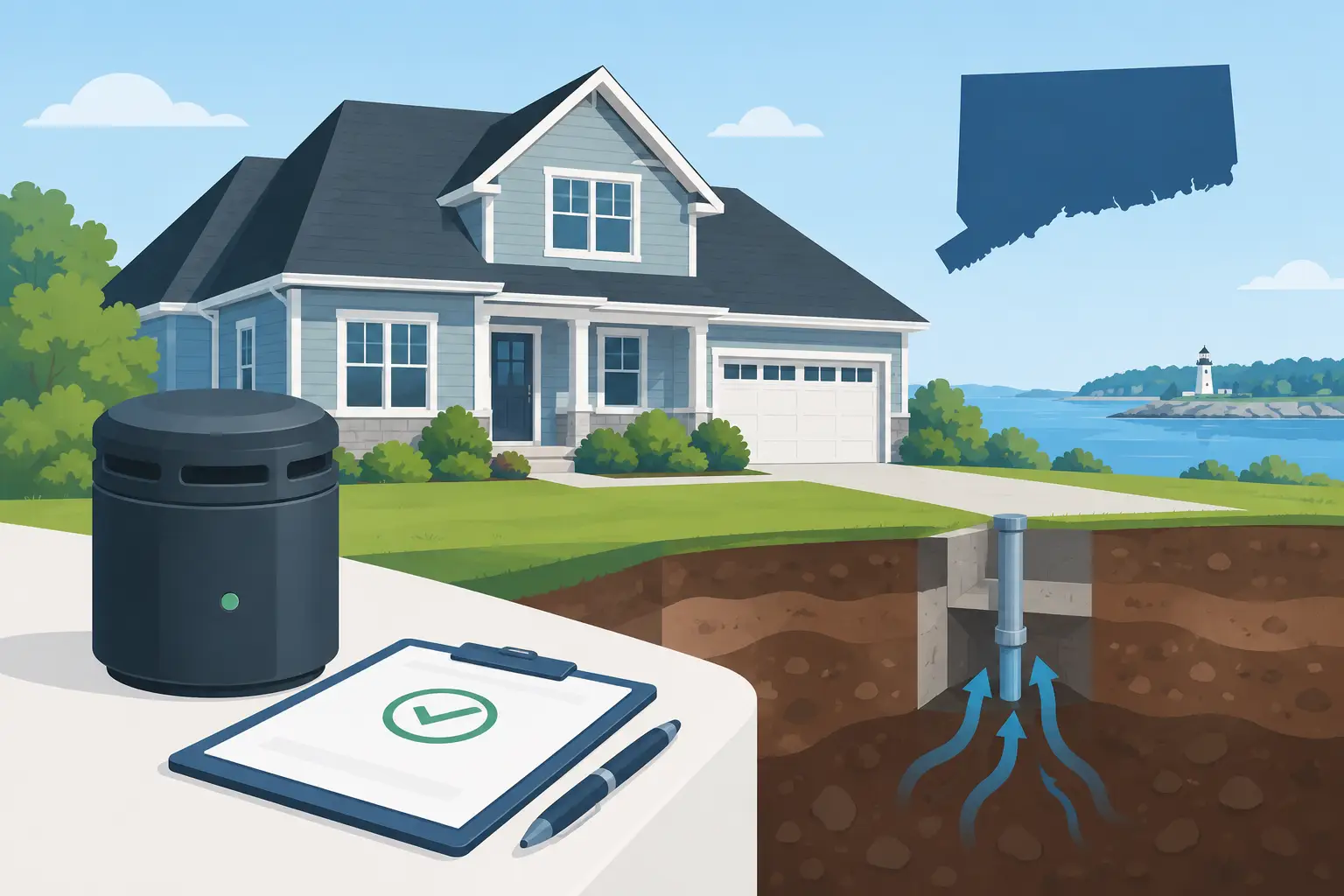
Radon is a naturally occurring radioactive gas produced as uranium breaks down in soil and rock. It moves through the ground and can enter a house through small openings in the foundation, including cracks, utility penetrations, sump pits, crawl spaces, and gaps around pipes. Once inside, it may become trapped and build up, especially during periods when windows are closed.
Connecticut has many areas with geology that can contribute to elevated radon levels, but radon is not limited to one town, county, neighborhood, or type of foundation. A newer home can have a high reading. So can a carefully renovated home, a house on a slab, or a property with no basement. Nearby test results can offer context, but they cannot predict the level in the home you are considering.
Long-term exposure to elevated radon is a recognized cause of lung cancer. The risk is especially significant for smokers, but nonsmokers can also be affected. Because exposure builds over years, the practical question for a buyer is simple: what is the radon level in the living space you may occupy?
What a Radon Test Measures
A residential radon test measures the concentration of radon in indoor air. Results are reported in picocuries per liter of air, written as pCi/L. The U.S. Environmental Protection Agency recommends taking action to reduce radon when levels are at or above 4.0 pCi/L. The EPA also advises considering mitigation for levels between 2.0 and 4.0 pCi/L.
Those numbers are guidelines for decision-making, not a guarantee that a lower reading has zero risk or that a higher reading makes the property unlivable. Radon levels can change with weather, season, ventilation habits, and how the home interacts with the soil. Still, a properly conducted real-estate test gives buyers a useful snapshot of conditions during the transaction.
Most purchase-related tests are short-term tests, often conducted over a minimum period of 48 hours. A certified professional places a device in the lowest level that could reasonably be used as living space, following established placement and closed-house-condition requirements. The device should not be placed in a kitchen, bathroom, laundry room, or directly beside windows, exterior doors, or heating and cooling equipment.
Timing Matters During a Real-Estate Transaction
The best time to schedule radon testing is during the home inspection period. Testing can often be coordinated with the inspection appointment, which helps keep your due-diligence schedule moving and avoids a separate delay.
Before the test begins, the home should generally remain under closed-house conditions. Exterior windows and doors should stay closed except for normal entry and exit. Heating and air conditioning may operate normally, but whole-house fans and certain ventilation practices can affect results. Your inspector should explain the preparation requirements clearly so the test is valid.
Avoid relying on a test performed years ago, even if the seller provides a previous report. A prior result may be helpful background, but conditions change. A mitigation system may have been altered, a basement may have been finished, a sump cover may be missing, or the home may simply be operating differently than it did at the time of the earlier test. A current result tied to the property transaction is more useful.
What Happens if the Result Is High?
An elevated radon result does not automatically mean you should walk away from the house. In many cases, radon can be reduced effectively through a mitigation system. The most common approach, called active soil depressurization, uses piping and a fan to pull radon gas from beneath the foundation and vent it safely above the roofline.
The appropriate system depends on the foundation design, soil conditions, and existing features such as sump pits or crawl spaces. A qualified radon mitigation professional should evaluate the home and provide a written scope of work. After installation, the property should be retested to confirm the system is reducing the radon level as intended.
From a negotiation standpoint, buyers and sellers have several reasonable options. The seller may install a mitigation system before closing, offer a credit, reduce the purchase price, or agree to another arrangement based on the contract and local market conditions. There is no single right answer. A buyer who wants the work completed before closing may prefer that the system be installed and retested in advance. A buyer who prefers control over the contractor and system design may favor a credit instead.
The key is to make the agreement specific. It should identify who will perform the work, what standard or target will be used, whether post-mitigation testing is required, and what happens if the result remains elevated. Vague language can create avoidable problems late in the transaction.
Common Questions Buyers Ask About Radon
Can a home pass inspection and still have high radon?
Yes. A general home inspection evaluates many visible and accessible components, including structure, roofing, electrical systems, plumbing, heating, and cooling. Radon is an environmental condition that requires its own test equipment and protocol. A home can be in excellent overall condition and still test above the recommended action level.
Does a basement have to be finished for radon to matter?
No. Radon testing is usually performed in the lowest level suitable for occupancy, whether or not that area is currently finished. Even an unfinished basement can affect air quality in the rest of the house. If you plan to finish the basement later, testing before purchase gives you a better understanding of the property before investing in that project.
Should buyers test a house with an existing mitigation system?
Yes. An existing system is generally a positive sign because it shows the issue has been addressed, but the system should be operating properly and should be verified with a current test. Check for a functioning fan, intact piping, a visible warning label, and a system monitor if one is installed. The test result is the clearest indication of current performance.
Can a seller refuse radon testing?
Testing rights and obligations depend on the purchase agreement. Buyers should discuss inspection and testing contingencies with their real-estate agent and attorney before deadlines approach. From a practical standpoint, a seller who allows a properly conducted test gives everyone clearer information and more options for resolving a finding fairly.
Choosing a Testing Professional
A do-it-yourself kit can be useful for a homeowner seeking general information, but a real-estate decision calls for careful testing procedures, documented chain of custody, and a report you can use during negotiations. Choose a qualified professional who follows recognized radon testing protocols, explains the setup requirements, and provides clear results promptly.
Ask how the device will be placed, how closed-house conditions will be communicated, when results will be available, and whether the report identifies the test location and test duration. Fast reporting matters in Connecticut transactions, but speed should not come at the expense of accurate procedures.
Grizzly Home Inspections provides radon testing as part of an accurate, detailed, and fast inspection process for Connecticut buyers. Clear explanations matter just as much as the number on the report, particularly when you need to decide how a result affects your next steps.
A house is a major investment, and some of its most meaningful conditions are not visible during a walkthrough. Schedule radon testing early enough to use the result, ask questions while your inspection period is still open, and make your decision with a clearer picture of the home you are buying.