
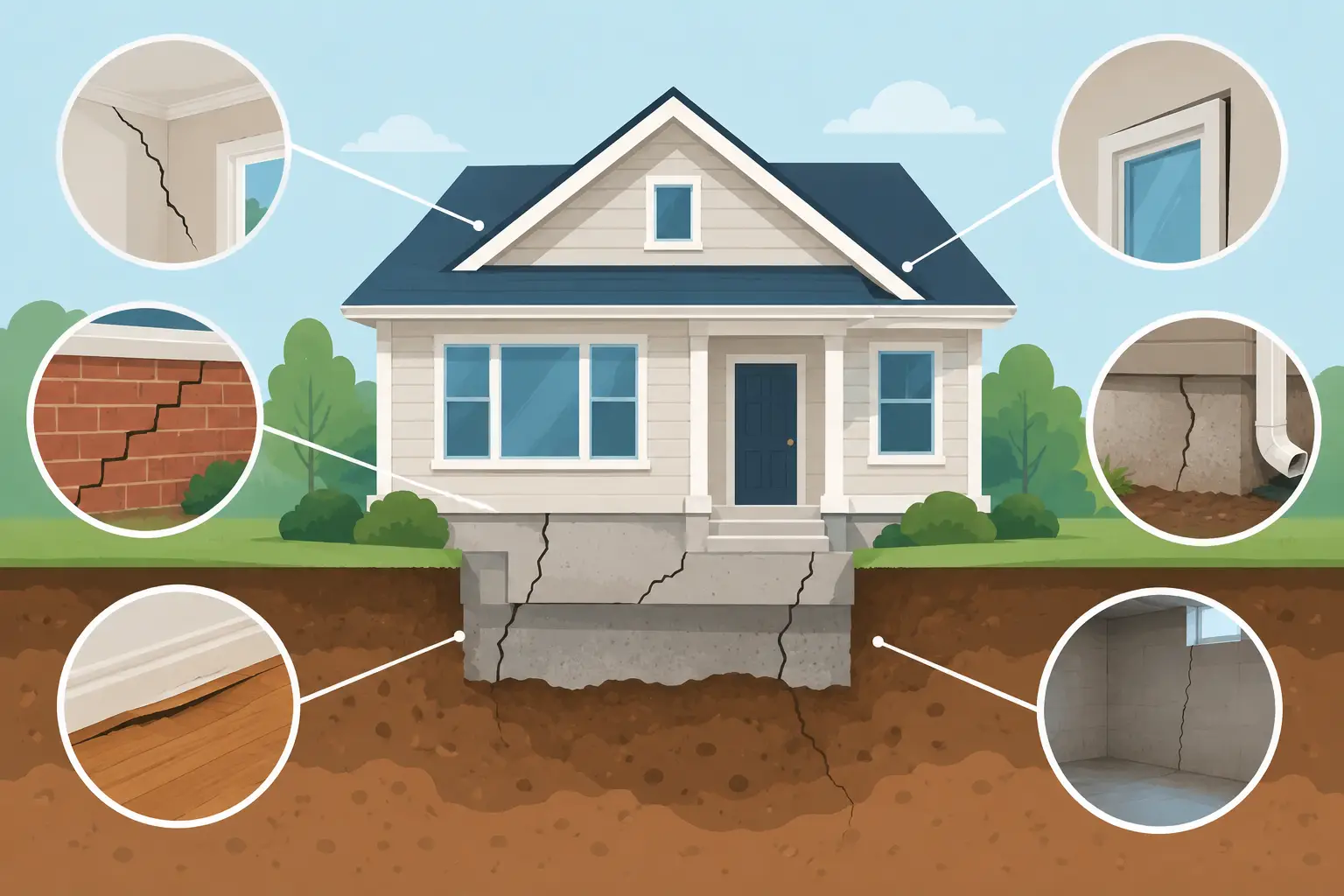
A hairline crack in a basement wall may be routine settling. A crack that keeps growing, lets in water, or appears alongside sticking doors is a different conversation. Knowing the signs of foundation problems in a house helps Connecticut buyers and homeowners separate normal aging from conditions that deserve a closer look before repairs, negotiations, or a major purchase.
Foundation concerns are rarely diagnosed by one symptom alone. Inspectors look at the full pattern: the age and type of the home, visible movement, drainage conditions, moisture intrusion, soil around the structure, and changes to interior finishes. A careful assessment gives you a clearer understanding of what you are seeing and what steps may be appropriate next.
Why foundations develop problems in Connecticut
A foundation supports the house and transfers its weight to the soil below. When the soil shifts, becomes saturated, dries out, or is affected by repeated freeze-thaw cycles, parts of the foundation can move differently than others. This is called differential movement, and it can place stress on walls, floors, framing, and finishes.
Connecticut homes face a mix of conditions that can contribute to movement. Heavy rain, snowmelt, poor grading, clogged gutters, high groundwater, aging drainage systems, and frost can all direct excess moisture toward a foundation. Older homes may also have stone, brick, or masonry foundations that require a different evaluation than newer poured-concrete foundations.
Not every crack means the foundation is failing. Concrete naturally shrinks as it cures, and small vertical cracks are common. The concern rises when cracks are wide, horizontal, diagonal, actively changing, or paired with water entry and noticeable movement elsewhere in the home.
10 signs of foundation problems in a house
1. Horizontal cracks in basement walls
Horizontal cracks in a poured-concrete basement wall can indicate pressure from saturated soil outside the home. As water builds up in the soil, it can push inward against the wall. These cracks deserve prompt evaluation, especially if the wall is bowing, leaning, or showing signs of displacement.
2. Stair-step cracks in brick or block
Cracks that follow mortar joints in a stair-step pattern may show that one area of the foundation is moving relative to another. This pattern is often seen in masonry walls, chimneys, brick veneer, and concrete block foundations. It does not automatically establish the cause, but it is a visible condition worth documenting.
3. Diagonal cracks at doors and windows
A diagonal crack running from the corner of a window or door opening can result from movement in the framing or foundation. Minor drywall cracks can also come from seasonal changes or ordinary settling, so location and severity matter. Several similar cracks throughout the home are more concerning than one small, isolated crack.
4. Doors and windows that suddenly stick
A door that has always rubbed slightly may be a simple adjustment issue. But doors and windows that begin sticking, fail to latch, separate from trim, or show uneven gaps can signal that openings are no longer square. When this happens with wall cracks or uneven floors, it may point to structural movement.
5. Sloping or uneven floors
Floors can slope for many reasons, particularly in older Connecticut homes. Settling, undersized framing, modifications over time, moisture damage, and foundation movement can all play a role. A noticeable slope, soft area, or new change in floor level should be investigated rather than covered with new flooring.
6. Gaps between walls, ceilings, or trim
Look for separation where walls meet ceilings, where baseboards meet flooring, or where cabinets and countertops pull away from walls. These gaps can develop when components of the house shift. They are not proof of a foundation problem by themselves, but they add useful context when other signs are present.
7. Bowing, leaning, or bulging foundation walls
A wall that is visibly out of plane needs attention. Bowing or bulging may result from soil pressure, water pressure, inadequate drainage, or long-term deterioration. This condition can worsen if the underlying cause is not addressed, and a qualified structural professional may be needed to recommend repairs.
8. Water in the basement or crawl space
Water does not always mean the foundation is moving, but repeated moisture is never something to ignore. Damp walls, puddling, efflorescence – the white mineral residue left behind by water – peeling finishes, or musty odors can indicate drainage problems around the home. Over time, excess moisture can increase soil pressure, damage materials, and create conditions that support mold growth.
9. Cracked or displaced exterior concrete
Walkways, patios, stoops, and driveways can settle independently from the house, so a cracked sidewalk is not necessarily a foundation issue. Still, exterior concrete that slopes toward the home, pulls away from the structure, or creates a path for water to collect near the foundation should be corrected. The goal is to move water away, not hold it against the house.
10. A chimney that is separating or leaning
A masonry chimney is heavy and often supported by its own footing. Gaps between the chimney and siding, cracked mortar, a visible lean, or separation near the roofline can indicate movement. Because a failing chimney can become a safety concern, it should be evaluated without delay.
What to check before assuming the worst
Start outside. Gutters should be intact and downspouts should discharge well away from the foundation. The soil around the home should slope away from the walls rather than toward them. Check for low areas, overflowing gutters, damaged splash blocks, leaking hose connections, and landscaping that traps water against the house.
Then look indoors for patterns. Are cracks concentrated in one area? Are they getting larger? Do they return after patching? Are windows, doors, floors, and basement walls all showing related changes? Photos with dates can be useful, particularly for homeowners monitoring a condition over several seasons.
Be cautious about quick cosmetic fixes. Filling a crack, repainting a wall, or adjusting a door may improve appearance, but it does not explain why the condition occurred. In some cases, the appropriate solution is straightforward drainage improvement. In others, movement may require further review by a licensed structural engineer or foundation repair specialist.
What buyers and sellers should do
For home buyers, foundation-related findings should be reviewed before the inspection contingency period ends. Ask for clear documentation of the location, type, and apparent severity of the issue. Depending on the findings, you may want additional evaluation, repair estimates, or more information about past water management and repairs before moving forward.
Sellers benefit from identifying visible conditions before listing. Addressing drainage issues, disclosing prior repairs accurately, and gathering records can prevent surprises during a buyer’s inspection. A pre-listing inspection can also help sellers decide whether a repair is worth completing before the home goes on the market.
Homeowners who notice new cracks or moisture should not wait for a real estate transaction to investigate. Early attention can sometimes limit water damage and help identify a manageable maintenance issue before it becomes a more expensive repair.
When to call an inspector or structural professional
A home inspection can identify visible signs of movement, moisture, drainage concerns, and related conditions throughout the property. It is a practical first step for many buyers and homeowners because it considers the house as a complete system rather than focusing on one crack alone.
However, a home inspector does not design foundation repairs or provide engineering calculations. If visible conditions suggest significant movement, structural instability, or an unclear cause, a structural engineer may be the right next professional. Their assessment can determine the likely cause, scope of concern, and repair approach.
Grizzly Home Inspections provides accurate, detailed, and fast property assessments for Connecticut clients who need a clearer picture of a home’s condition. The right answer may be simple maintenance, more monitoring, or a specialist evaluation. What matters is having enough reliable information to make the next decision with confidence.